Manage Builder Tasks Like Electrical, Plumbing, and Pipeline Work on a Map Using Task Management

Construction projects involve multiple activities running in parallel—electrical wiring, plumbing installation, and pipeline work—across different parts of a site. Managing all of this efficiently becomes difficult when updates are scattered and there is no clear view of what’s happening where.
A map-based task management approach brings structure by linking every task directly to its on-site location, making project execution more organized and transparent.
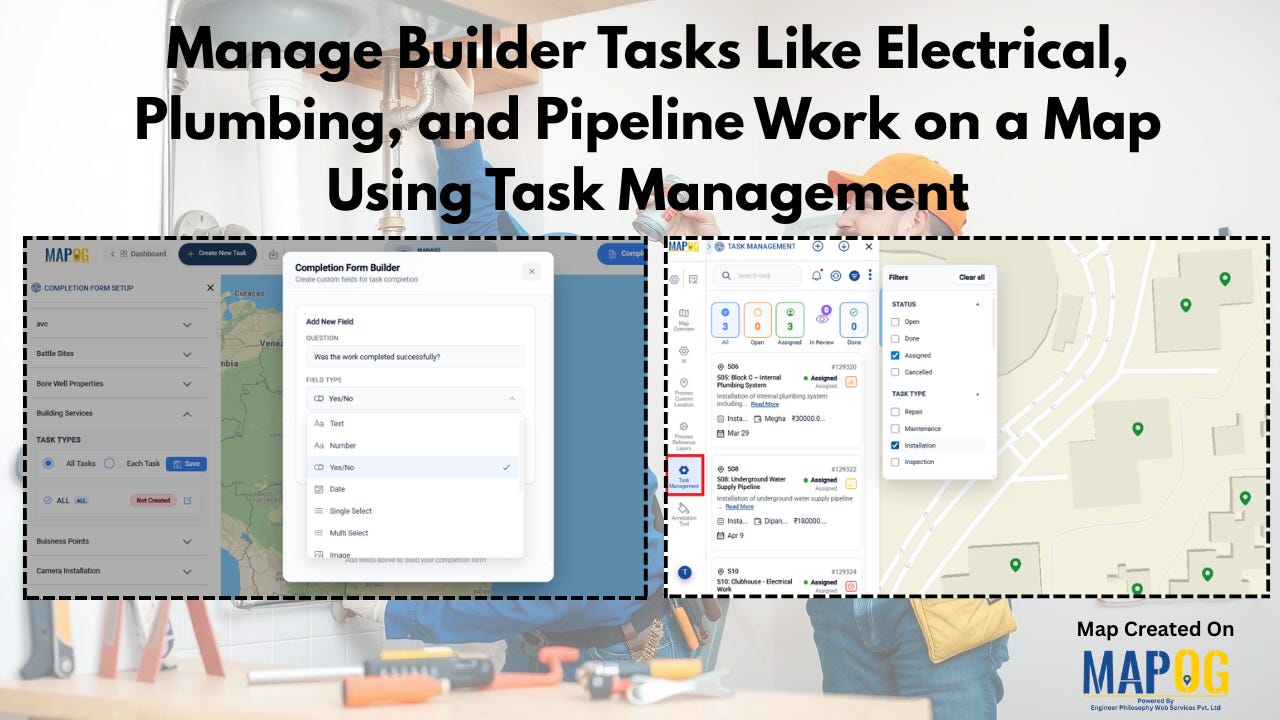
The Challenge of Managing Parallel Work
In real estate projects, different teams operate simultaneously across buildings, floors, and utility areas. Task updates are often shared through calls, chats, or spreadsheets, which leads to fragmented information.
As a result:
Task status is unclear or outdated
Site updates are inconsistent
Managers struggle to track progress across locations
This lack of visibility slows down decision-making and increases the chances of delays and rework.
Mapping the Project for Better Visibility
Breaking down the construction site into mapped locations—such as buildings, units, parking areas, and service zones—creates a structured way to manage work. Each location becomes a task point, allowing managers to assign work precisely and visually track progress across the entire project. Instead of relying on abstract task lists, teams can see exactly where work is happening, which makes it much easier to manage large and complex sites efficiently.
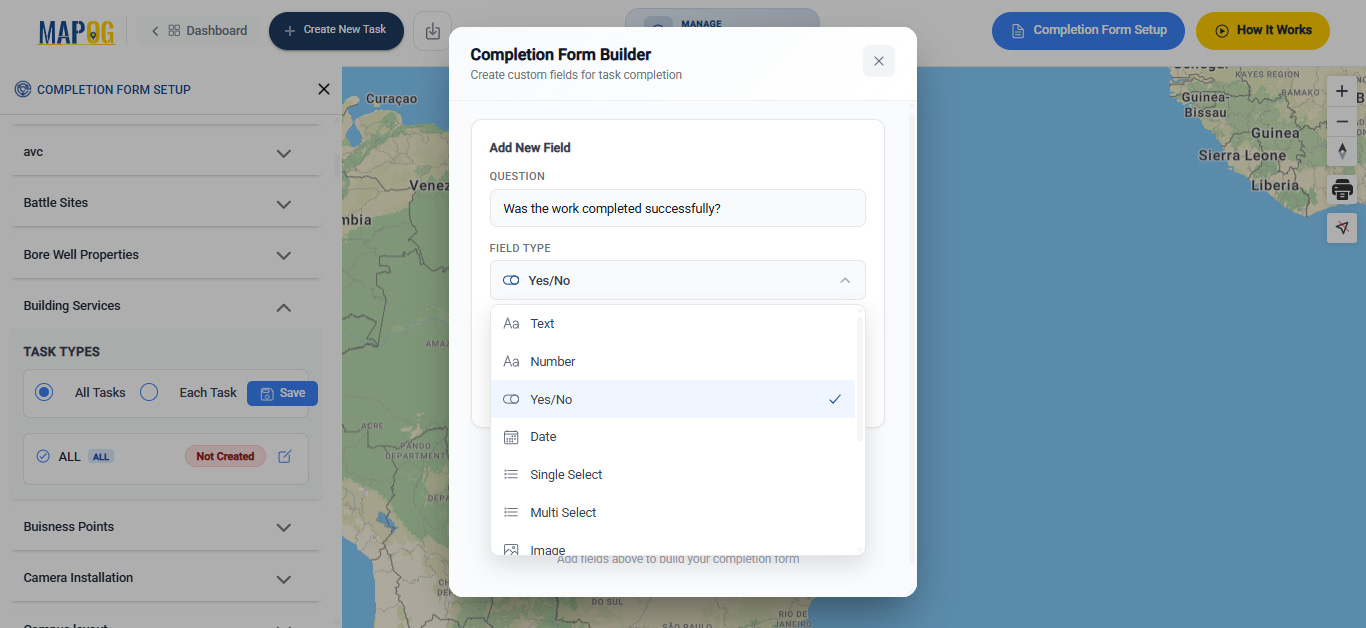
A Location-Based System That Solves the Problem
A platform like MAPOG brings together mapping and task management into a single system, directly addressing the common challenges in construction workflows.
It enables builders to:
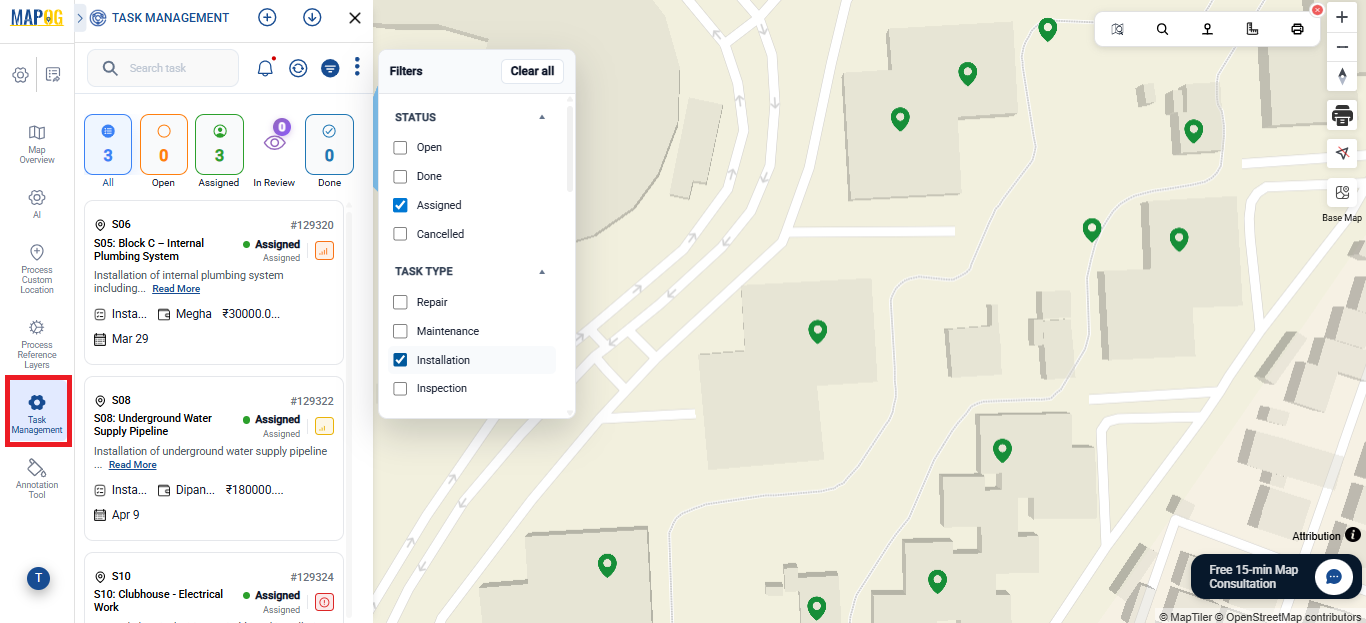
Create location-based tasks: Every task is pinned to a specific site location, eliminating confusion about where work is happening
Assign tasks to teams: Electrical, plumbing, and pipeline work can be distributed clearly
Enable real-time field updates: Teams update status, upload photos, and add notes directly from site
Standardize workflows: Installation, maintenance, repair, and inspection tasks can follow structured formats
Track progress centrally: Managers get a live overview without constant follow-ups
By combining location data with task tracking, this approach ensures that all information is organized and always up to date.
Efficient Task Assignment and Coordination
Once tasks are mapped and structured, assigning work becomes much more straightforward. Electrical installations, plumbing fittings, and pipeline inspections can be allocated to the right teams with clear timelines and instructions. Because all tasks are visible in relation to each other, teams can better understand dependencies, avoid overlaps, and coordinate their work more effectively. This reduces delays and helps maintain a smoother workflow across the entire project.
Centralized Monitoring and Records
Every task maintains a complete history—status updates, images, notes, and timestamps—linked to its exact location. This creates a reliable system for tracking and verification.
Managers can:
Monitor progress across all areas
Identify delays quickly
Maintain records for audits and handovers
With tools like MAPOG, project control becomes more structured, with all information stored in one place.
Conclusion
Managing construction tasks across electrical, plumbing, and pipeline work becomes significantly easier when tasks are tied to location. A map-based approach improves visibility, coordination, and accountability across the project.
For real estate projects handling multiple parallel activities, this method provides the clarity and control needed to keep everything on track.